















Electric vs Gas Geyser: Which Is Better for Pakistani Homes?
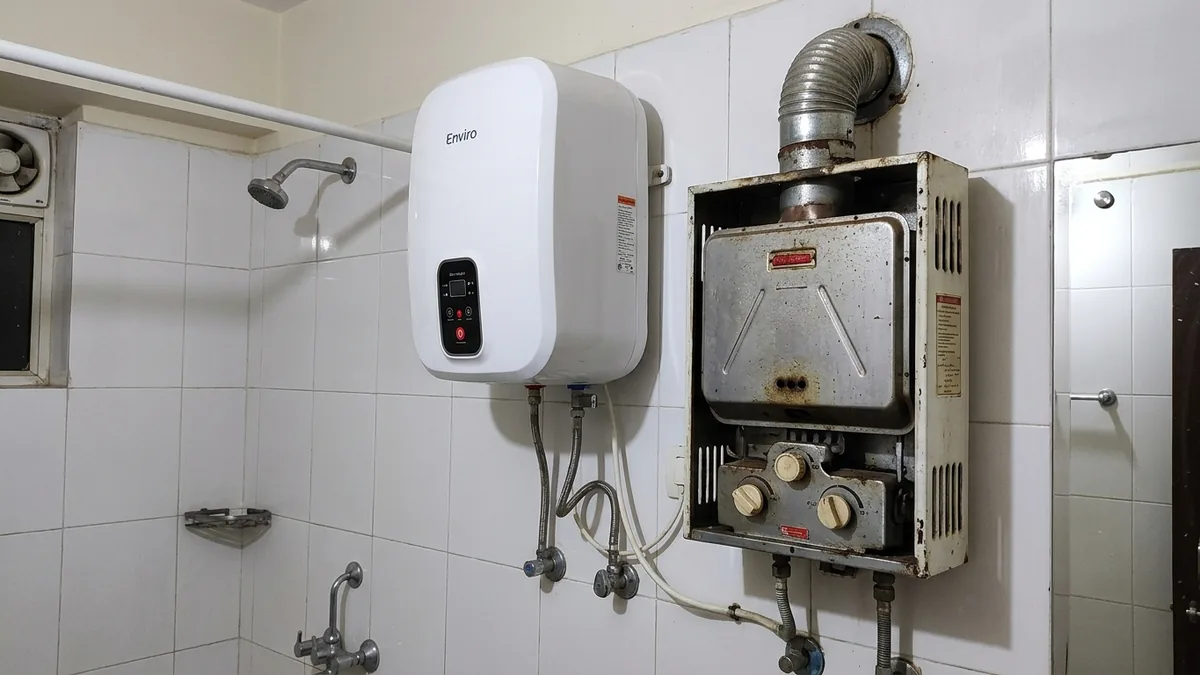
Electric vs gas geyser: for most Pakistani homes today, an electric geyser is the safer and more reliable choice, because it doesn’t depend on winter gas supply and gives off no fumes. A gas geyser can still cost less to run if your home gets steady, full-pressure piped gas all day. This guide compares both on running cost, gas load shedding, safety and installation, so you can pick the right one for your family.
Electric vs Gas Geyser at a Glance
| Point | Electric geyser | Gas geyser |
|---|---|---|
| Energy source | Electricity (about 2000 W for a home storage model) | Piped natural gas, or LPG from a cylinder |
| Works during gas load shedding | Yes | No, or only weakly at low pressure |
| Works during power load shedding | Does not heat, but an insulated tank keeps water warm for a while | Yes, for most models with a pilot flame |
| Fumes and carbon monoxide | None | Needs a flue pipe and fresh air; risky in a closed bathroom |
| Where it can go | Inside the bathroom, on the wall | Outside or in a well-ventilated space, with a chimney |
| Running cost | Depends on your electricity rate per unit | Lower when piped gas is steady; higher on LPG |
| Control | Thermostat, timer, and on smart models a phone app | Mostly a manual knob |
How a Gas Geyser Works, and Where It Falls Short
A gas geyser burns natural gas or LPG to heat water. Many Pakistani homes have a storage gas geyser: a large tank, sized in gallons, with a small pilot flame that stays lit. Some homes use an instant gas geyser, which heats water only while the tap is open.
Gas geysers became popular because piped gas was cheap and plentiful. That has changed. Gas pressure drops in winter, exactly when you need hot water most. Many new houses and flats also have no gas connection, so they would have to run a gas geyser on LPG cylinders, which costs much more.
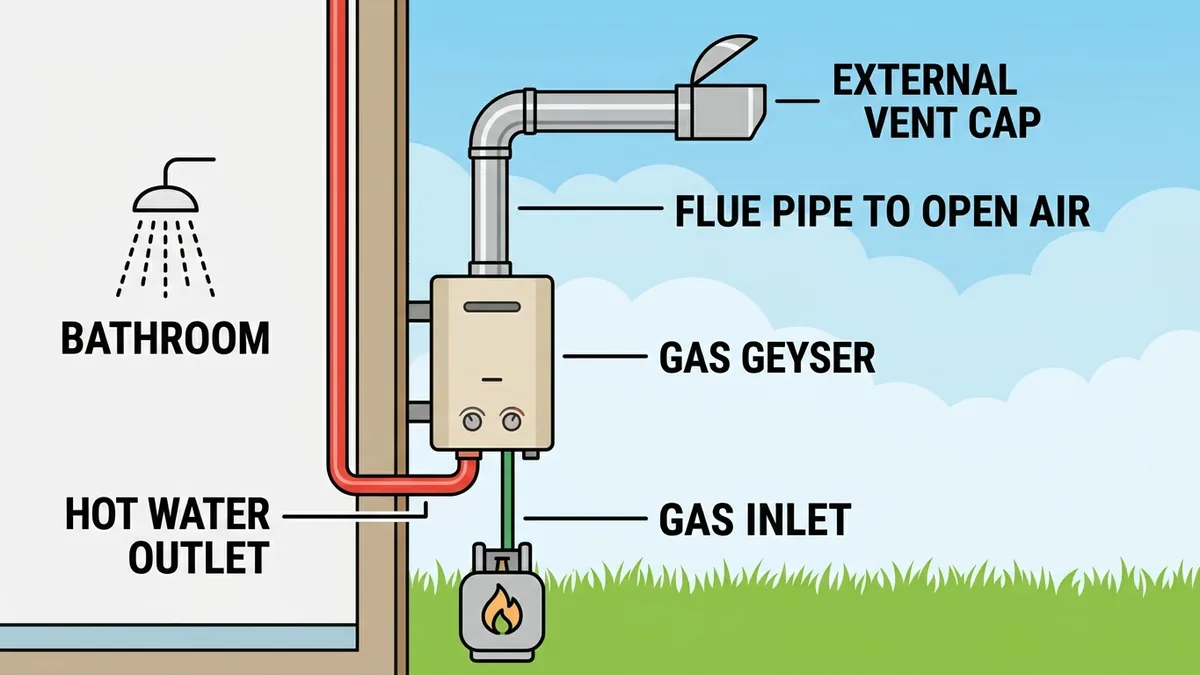
A gas geyser also burns fuel inside your home. It needs a proper flue pipe to carry fumes outside, and it should never sit inside a closed bathroom.
How an Electric Geyser Works
An electric geyser heats water in an insulated tank with an electric element, like a large kettle with a thermostat. Once the water reaches the set temperature, it switches off and the tank keeps the water hot.
Modern models do much more than older ones. The Midea 50 litre smart geyser, for example, lets you set a heating timer from your phone, so water is hot before you wake up. It also has an earth leakage circuit breaker (ELCB), overheat cut-off and a pressure-relief valve.
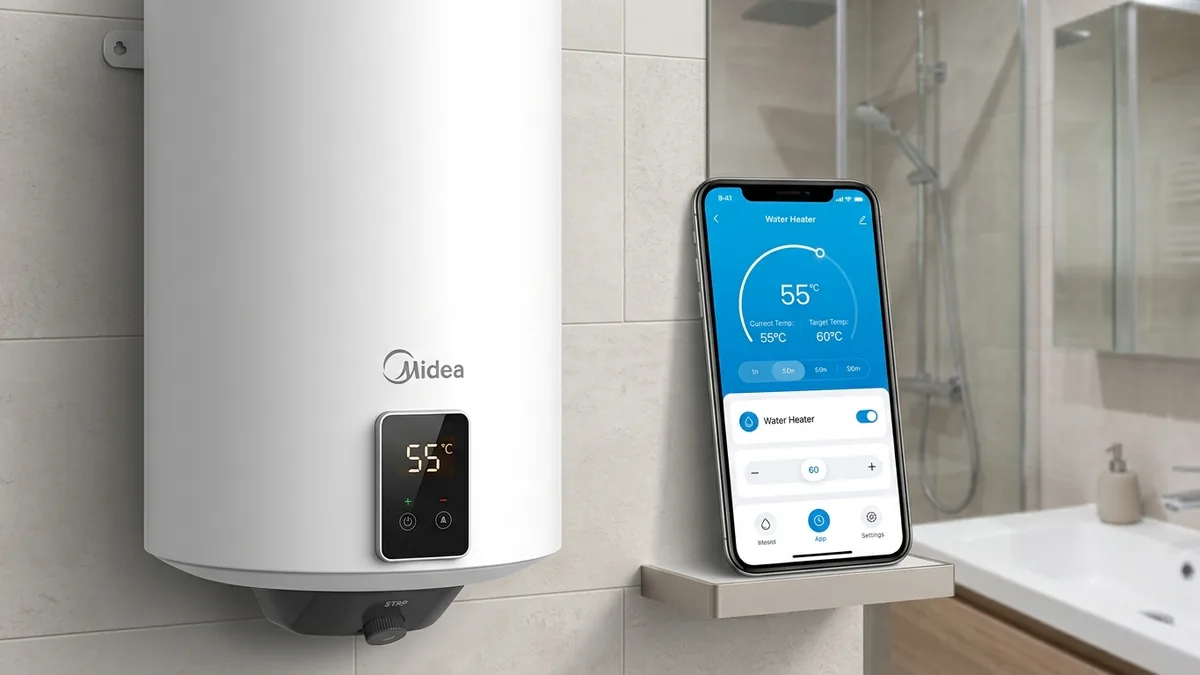
An electric geyser needs no gas line, flue or chimney. It mounts on the bathroom wall, which makes it the practical choice for flats and new homes.
Running Cost: What You Actually Pay
For an electric geyser, the maths is simple. A 2000 W geyser uses 2 units (kWh) for every hour it heats. Midea’s figure for its 50 litre model is about 2.3 units to heat a full tank from 15°C to 55°C, which takes about 70 minutes.
To work out your own cost, multiply the units by the per-unit rate on your electricity bill. The tank doesn’t heat all day. It heats once, then tops up as you use water.
Gas is harder to compare. On steady piped gas, a gas geyser often costs less per bath. On LPG, or with a pilot flame burning gas day and night, that saving shrinks. The fairest test is your own bills: compare a winter month’s gas bill with and without the geyser running.
Whichever you choose, these habits cut the cost:
- Set the thermostat to 50–55°C instead of the maximum.
- Heat water only before shower times, using a timer or the app.
- Choose the right tank size, so you don’t pay to heat water nobody uses.
Gas Load Shedding: The Winter Problem
In recent winters, gas companies have rationed supply to homes. In winter 2025-26, SNGPL supplied gas to homes in Punjab and Khyber Pakhtunkhwa in three daily windows from December to February, mainly around meal times (Profit, December 2025).
Outside those hours, a gas geyser can’t heat water, and low pressure inside the windows makes it slow. An electric geyser keeps working whatever the gas schedule.
Electricity load shedding affects electric geysers, but you can plan around it. Heat the tank before a scheduled outage. A well-insulated tank keeps the water warm for hours. Most home UPS systems can’t run a 2000 W heater, so don’t count on a UPS for it.
Safety: Carbon Monoxide vs Electric Shock
A gas geyser that burns without enough fresh air produces carbon monoxide, a gas you can’t see or smell. In a closed bathroom in winter, it can kill. In one reported case, two sisters visiting family in Gujrat died after a gas leak from a geyser in their room (Eastern Eye), and in 2021 a student in Islamabad died from carbon monoxide from a bathroom geyser (ARY News).
If you keep a gas geyser:
- Install it outside the bathroom, with a flue pipe to the open air.
- Keep vents open and never block the chimney.
- Have the burner and pipes checked before every winter.
An electric geyser produces no fumes. Its main risk is electrical, so it needs proper earthing and a dedicated circuit. Good models add an ELCB that cuts the power if it detects current leaking, and an IPX4 water-resistant body for bathroom use.
Which One Should You Choose?
Choose an electric geyser if:
- Your gas pressure drops in winter, or gas comes only at set times.
- You live in a flat or new house with no gas connection.
- You want the geyser inside the bathroom, with no flue or chimney work.
- Safety for children and elderly family members matters most to you.
A gas geyser may still suit you if:
- You get steady, full-pressure piped gas through the day.
- You have long power cuts and a safe, ventilated spot outside the bathroom for the geyser.
Some families keep their old gas geyser as a backup and add an electric geyser for the main bathroom. That way, hot water never depends on one supply.
Picking the Right Electric Geyser Size
Size matters as much as type. Too small and the last person gets cold water. Too big and you pay to heat water nobody uses. As a guide:
- 1–2 people: the Midea 30 litre geyser suits a couple or a single bathroom with short showers.
- 2–3 people: a 50 litre tank handles back-to-back showers for a small family.
- 4 or more people: the Midea 100 litre electric geyser keeps up when the whole house showers in the same hour.
You can compare all sizes on our electric geyser range. Delivery is free across Pakistan, from Lahore to smaller towns, and Midea’s own service team handles installation.
Frequently Asked Questions
Which is cheaper to run, a gas geyser or an electric geyser?
On steady piped gas, a gas geyser often costs less per bath. On LPG, or when gas supply is cut for most of the day, an electric geyser often works out better value because it actually delivers hot water. Check the per-unit rate on your electricity bill to estimate your cost: a 2000 W geyser uses 2 units per hour of heating.
Does an electric geyser work during load shedding?
It doesn’t heat while the power is off, but an insulated tank keeps already-heated water warm for hours. Heat the tank before a scheduled outage, or set a timer to do it for you.
Is an electric geyser safe in the bathroom?
Yes, when installed with proper earthing on a dedicated circuit. It produces no fumes, unlike a gas geyser. Look for an ELCB and a water-resistant body, such as IPX4.
Can I install an electric geyser if I already have a gas geyser?
Yes. You can keep the gas geyser as a backup and use an electric geyser for the main bathroom.
What is the price of an electric geyser?
Prices change often, so call or WhatsApp 0332-9944444 or email sales@zahidbrothers.com for today’s price on any Midea geyser.